- Summary
- QEMU (KVM) is a powerful virtualization technology allowing virtual machines to run on x86-based Linux hardware platforms. It provides comprehensive support for various guest operating systems, such as Windows, Ubuntu, Debian, and CentOS, along with numerous management tools and configuration clients. Users can choose from clients like Virtio, AQEMU, and others to manage their virtualized environments, or utilize native guest management tools to control hardware resources dynamically. This suite includes features like Nested Virtualization for advanced isolation, optimized CPU extensions for performance, and secure kernel merging (SamePage Merging) to protect virtual memory during hardware changes. Security measures encompass authentication mechanisms, firewall rules, and vulnerability scanning to ensure data protection while allowing virtual machines to boot on Linux systems. Performance is significantly enhanced by optimizing schedulers for the guest and improving disk caching to reduce latency. QEMU also offers a robust API for developers to extend its capabilities and adapts guest scheduling capabilities, such as scheduling to the disk or cache, to meet enterprise-level requirements. Furthermore, it supports multiple KVM versions with built-in features for enhanced security, ensuring that the software remains stable and secure against common exploitation attacks like code injection or remote code execution risks in virtual environments.
- Title
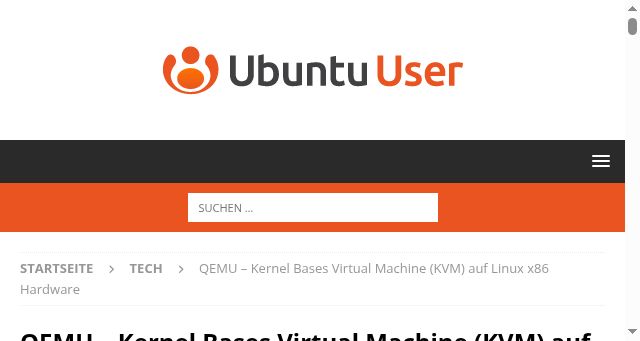
- QEMU - Kernel Bases Virtual Machine (KVM) on Linux x86 hardware
- Description
- Discover QEMU, the efficient solution for KVM (kernel-based virtual machines) on your Linux x86 hardware - flexibility meets performance.
- Keywords
- linux, kernel, performance, sind, integration, tools, https, server, dass, oder, tech, coding, hardware, merging, dies
- NS Lookup
- A 85.13.165.138
- Dates
-
Created 2026-03-09Updated 2026-04-02Summarized 2026-04-02
Screenshot
Query time: 2066 ms