- Summary
- One of the primary challenges of modern cybersecurity is insufficient resources to deploy robust controls efficiently, forcing teams to allocate their efforts strategically. This is exemplified by Jason Chung's internships where he leveraged machine learning to build detailed software manifests for servers in a network. These tools allow teams to identify risk areas and allocate time and expertise effectively without being overwhelmed by complex control tasks. The resulting software manifests enable better visibility into system integrity.
The core of their work lies in using machine learning algorithms to extract patterns from large-scale data, allowing organizations to spot vulnerabilities before they manifest in a real-world attack. This approach shifts the focus from simply checking every server to continuously monitoring and adapting security protocols in real-time. Such mechanisms are crucial in environments with limited budgets, ensuring that resources are spent on what matters most.
Furthermore, implementing these manifests provides a transparent method to track changes and demonstrate risk reduction, which is vital for stakeholder trust and future regulatory compliance. By combining data-driven insights with automated detection, companies can create a sustainable and agile strategy to secure their systems across various environments. - Title
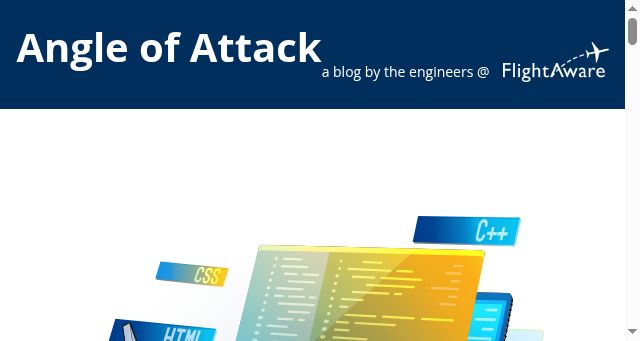
- Angle of Attack
- Description
- The Engineering Blog from FlightAware
- Keywords
- read, network, aviation, make, engineers, page, posts, post, design, might, there, time, issues, flight, tracking, assumptions, data
- Upstreams
- flightaware.com
- Downstreams
- linkedin.com, github.com, flightaware.com
- NS Lookup
- A 151.101.67.7, A 151.101.131.7, A 151.101.195.7, A 151.101.3.7
- Dates
-
Created 2024-02-23Updated 2026-01-26Summarized 2026-03-22
Screenshot
Query time: 231 ms